Step Over runs an expression and returns control to the debugger. A Squeak Inbox proposal looks at what happens when code asks for its caller in the middle of that step.
Published · Curated links & context
WHAT CAUGHT OUR EYE
News & articles
Dates below belong to the original sources. Evergreen resources are labeled separately from dated news.
DEVELOPMENT NEWS · SQUEAK INBOX PROPOSAL
The next frame can be a debugger guard
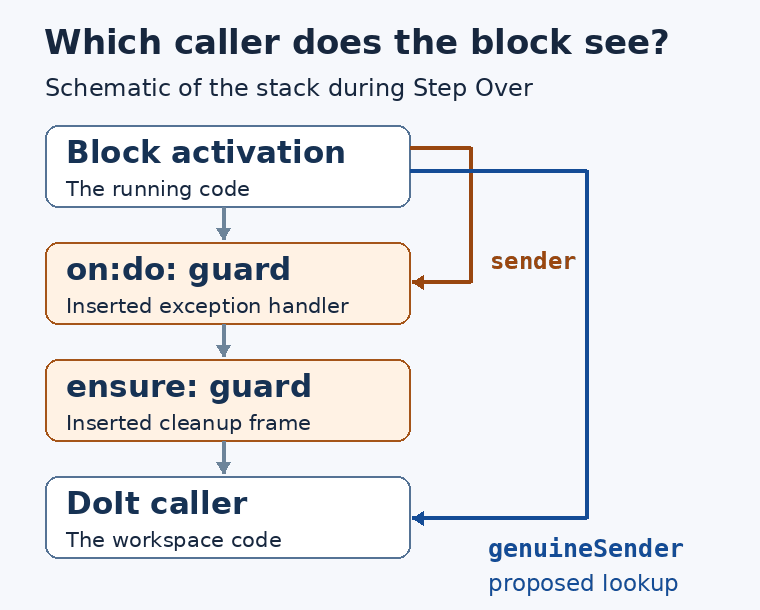
On November 19, Jaromir Matas described temporary exception and cleanup frames that Squeak can insert while stepping. They help the debugger regain control after the stepped code runs or raises an unhandled error. In his pre-patch example, he debugs [thisContext sender explore] value and steps over the outer value message. He reports that Explorer opens on the inserted on:do: frame rather than the Workspace’s DoIt frame. His separate comparison, on the proposed patch, is [thisContext genuineSender explore] value. That asks to see the ordinary caller instead.
Why explore it?
A context represents a method or block activation. The immediate link in its sender chain can be useful when inspecting how the debugger itself works. The proposed private genuineSender accessor instead follows that chain past marked guard frames. It does not redefine sender or remove the frames, and an ordinary handler written in application code is not automatically skipped.
Published 22 November 2026. We reviewed the November 19 author thread and Inbox diff. Matas presented the patch for discussion and called for more tests and comments. We did not load it, reproduce the reported behavior, or verify a Trunk merge.